
A growing number of North Carolinians support marijuana reform, according to recent polling, as communities across the state continue debating how cannabis should be regulated and how marijuana laws are enforced.
A recent WRAL/WSOC poll found that 63% of North Carolina respondents support legalizing recreational marijuana, including 52% of Republicans, 73% of Democrats, and 65% of independents. Support for legalizing medical marijuana was even higher, at 74%.
These findings come amid ongoing efforts to change marijuana policy at both the state and local levels. For Emancipate NC, the conversation is about more than legalization. It is also about the consequences of criminal enforcement, the disproportionate impact of marijuana laws on Black and Brown communities, and the need for policies that prioritize fairness and public safety.
In Winston-Salem, Emancipate NC has been supporting local efforts to change how the city responds to marijuana possession. On August 20, the organization announced its support for a campaign led by Hate Out of Winston advocating for a proposed Fair Justice & Public Safety Ordinance.
Among the proposed changes are replacing custodial arrests with citations for misdemeanor marijuana possession involving up to 1.5 ounces and making adult marijuana possession a low enforcement priority. These provisions reflect changes the campaign is seeking from the Winston-Salem City Council; the announcement does not establish that the ordinance has been adopted.
The effort highlights an important distinction in the marijuana reform debate: changing the law is one part of reform, while changing how law enforcement applies existing laws is another. Citation-based approaches and lower enforcement priorities can reduce the circumstances in which minor possession offenses lead to arrests and their potentially far-reaching consequences for individuals and families.
Emancipate NC continues to challenge enforcement practices that can expose people to searches, arrests, and criminal charges. The organization has also raised concerns about the use of marijuana odor alone as a justification for searches and arrests.
The statewide conversation extends beyond marijuana legalization to the regulation of intoxicating hemp products. In an April 2 interim report, the North Carolina Advisory Council on Cannabis identified gaps in oversight, including safeguards related to product testing, labeling, packaging, and age verification.
These questions underscore the need for clear, consistent policies that address consumer safety while accounting for the broader effects of cannabis enforcement. As lawmakers and local governments consider regulatory approaches, the challenge is to develop policies that protect the public without unnecessarily expanding criminal penalties or reinforcing unequal enforcement.
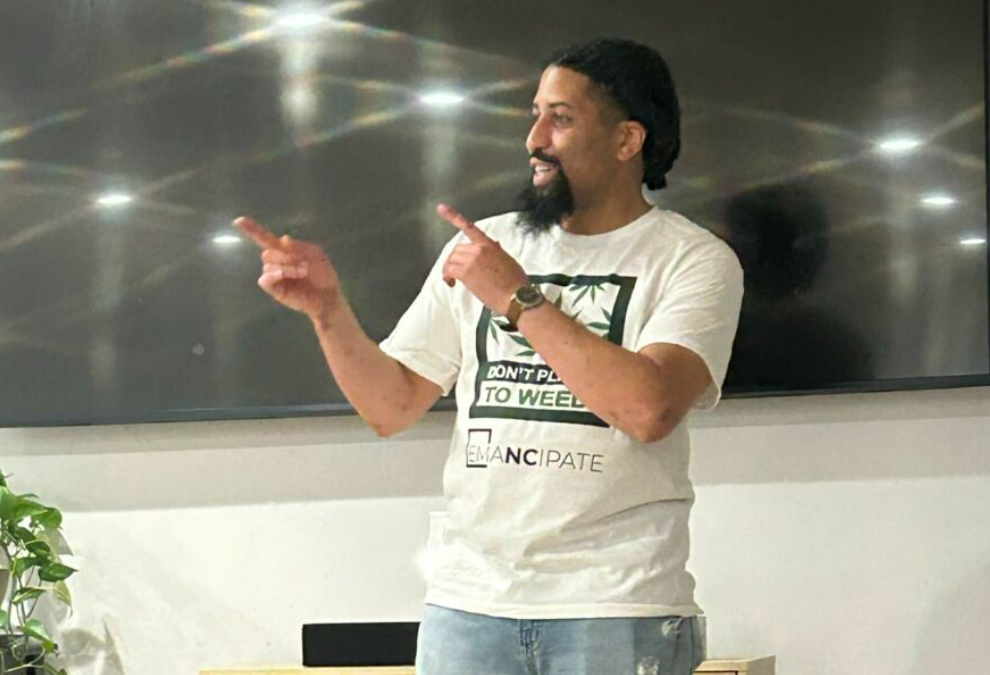
Emancipate NC has helped bring these issues into community conversations. Among many other conversations, in 2025, the organization partnered with the Child and Family Action Coalition on a forum examining hemp laws, marijuana enforcement, and potential reforms. The discussion was led by Sen. Natalie Murdock and Emancipate NC attorney Dillon Sharpe.
From community education and local policy advocacy to legal challenges involving searches and arrests, Emancipate NC works to address the human consequences of marijuana enforcement and advance fairer approaches to public safety.
The polling reflects broad support for marijuana reform across political affiliations, while ongoing debates in Winston-Salem and Raleigh demonstrate that significant policy questions remain. Emancipate NC will continue working alongside community partners to challenge harmful enforcement practices, inform public discussion, and advocate for policies that protect the rights and dignity of North Carolina residents.