
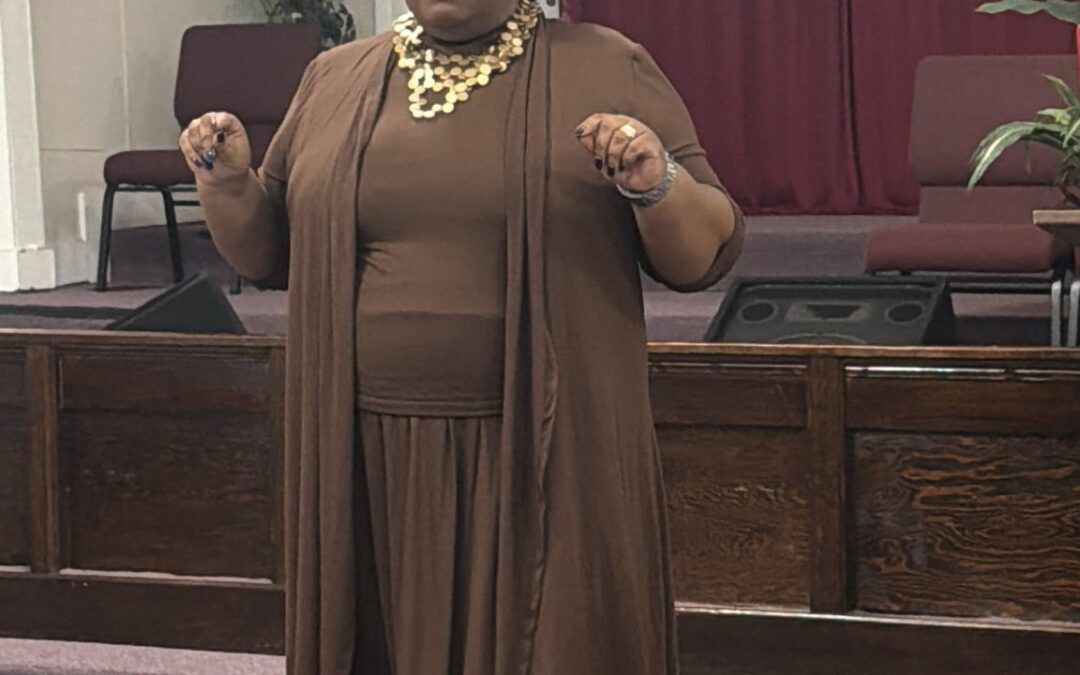
The NAACP Sanford (Lee County) Branch officially launched its Justice Bus Tour with a powerful and timely presentation by Executive Director Dawn Blagrove, whose remarks left a lasting impression on community members of all ages.
As a featured speaker for the inaugural stop, Dawn brought clarity, urgency, and depth to a complex and far-reaching piece of federal legislation known as the One Big Beautiful Bill Act—often referred to by advocates as the “Big Ugly Bill.” Her presentation broke down how the bill’s provisions directly affect justice, healthcare, education, and access to critical resources, helping attendees understand not only what the bill includes, but how its consequences show up in everyday life.
Dawn explained that the legislation has drawn significant criticism for potentially widening wealth inequality and disproportionately harming marginalized communities, particularly Black Americans. While the bill includes tax cuts that largely benefit higher-income households, the most substantial gains flow to the wealthiest Americans. At the same time, the bill proposes deep cuts to essential social programs such as Medicaid, Medicare, and the Supplemental Nutrition Assistance Program (SNAP)—services that Black families rely on at higher rates due to longstanding structural inequities.
The implications are profound. Cuts to Medicaid could result in an estimated 10 million more people becoming uninsured by 2034, while changes to SNAP could cause approximately 22 million families to lose some or all of their food assistance, increasing food insecurity nationwide. Civil rights advocates warn that these combined impacts threaten the stability of low-income families and risk deepening racial and economic disparities.
What resonated most strongly with attendees was Dawn’s candid discussion of how policy decisions translate into lived experiences for Black communities. Many participants shared afterward that her message helped them “connect the dots” between legislation passed in Washington and the challenges faced at home. Several noted that it was information far more people need to hear—and wished even more community members had been in the room.
The response from young people was especially powerful. Youth attendees said Dawn’s words affirmed their reality while underscoring the importance of awareness, preparation, and, as one participant put it, simply “making it home.” That combination of hard truth and encouragement created a meaningful connection that made the information both accessible and motivating.
As the Justice Bus Tour continues, this inaugural stop laid a strong foundation: grounding policy in real life, centering racial equity, and equipping communities with knowledge to better understand—and respond to—the forces shaping their futures.